5 Signs Your Oil Change Is Overdue (Before Your Engine Tells You)
Your engine oil does much more than reduce friction. It helps control heat, carries contaminants away from precision components, and protects moving parts from premature wear. When oil becomes old, contaminated, or low, your engine may begin showing warning signs before serious damage occurs.
This is especially important if you drive a BMW, Mercedes-Benz, Audi, Porsche, or another European vehicle. Turbochargers, variable valve timing systems, and tightly engineered engine components depend on the correct oil type and timely service.
Below are five practical signs that your oil change may be overdue. Some symptoms can also point to leaks or other mechanical problems, so do not rely on one clue alone. If something feels or sounds different, a professional inspection can help protect your vehicle and your investment.
1. Your Oil or Service Warning Light Appears
The most direct warning is an oil-related message or service reminder on your dashboard. Many modern vehicles calculate oil service intervals based on mileage, time, engine temperature, driving conditions, and the number of starts. Your BMW, Mercedes-Benz, or Audi may display a service-due notification before the oil is severely degraded.
Pay close attention to:
- An oil-change reminder or low oil-life message
- A service interval notification that has passed
- A low oil-level warning
- An oil pressure warning light that stays on or flickers
- A message telling you to stop the engine
A routine service reminder generally means it is time to schedule maintenance. A red oil pressure warning is more serious. If it stays illuminated while the engine is running, pull over safely and shut the engine off as soon as possible. Continuing to drive with low oil pressure can cause severe internal damage.
Your owner’s manual and onboard service system should guide your maintenance interval. However, if you have driven well beyond the recommended date or mileage, do not wait for another warning. Oil can lose its protective properties even when the vehicle still appears to run normally.
2. The Oil Looks Gritty, Thick, or Contaminated
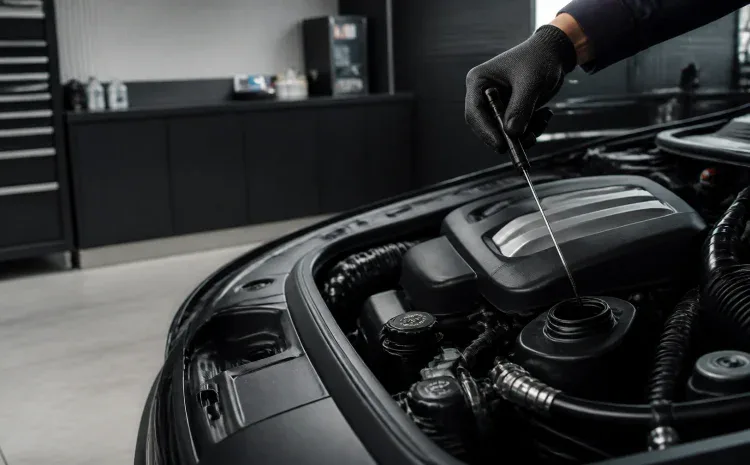
Checking the oil with a dipstick can provide useful information, although appearance alone does not tell the whole story. Fresh oil is often amber or honey-colored, but it naturally becomes darker as it circulates through the engine. Dark oil does not automatically mean it is dangerously overdue.
The following signs are more concerning:
- Grit or visible particles on the dipstick
- Thick, tar-like, or gel-like oil
- A strong burnt smell
- Oil that appears unusually sludgy
- A level below the minimum mark
Grit can indicate that dirt, carbon, or other contaminants are circulating through the lubrication system. Thick or sludgy oil may suggest oxidation, extended service intervals, repeated short trips, or excessive heat. These conditions can restrict small oil passages and interfere with components such as camshaft adjusters and turbocharger bearings.
European engines often operate with high temperatures and close internal tolerances. Using the wrong oil specification or stretching service intervals can increase wear over time. If you are unsure how to check your oil, or your vehicle does not have a conventional dipstick, a trained technician can inspect the level and condition using the correct procedure.

3. You Hear New Ticking, Tapping, or Knocking
Oil cushions the contact between many moving engine components. As it breaks down or becomes too low, friction and mechanical noise can increase. You may notice a ticking sound during startup, a louder-than-usual engine, or a deeper tapping or knocking noise under acceleration.
Common sounds include:
- Ticking that lasts longer than usual after a cold start
- Tapping from the upper engine area
- A louder or rougher mechanical sound at idle
- Rattling associated with timing components
- Deep knocking or rumbling from the engine
A brief startup sound is not always caused by overdue oil. Some engines naturally make more noise for a moment while oil pressure builds. However, a new sound that becomes more frequent or lasts longer deserves attention.
Deep knocking, loud metallic tapping, or an oil pressure warning should be treated as urgent. These symptoms may indicate a serious lubrication or internal engine problem. Driving farther could turn a manageable maintenance issue into an extensive repair.
If you need advanced computer diagnostics, an experienced technician can combine scan data, oil inspection, pressure testing, and hands-on evaluation to determine what is actually happening.
4. You Smell Burnt Oil or Notice Smoke
A burnt-oil smell is another reason to schedule service promptly. You may notice it inside the cabin, around the front of the vehicle, or after parking. This smell can occur when oil has overheated, but it can also indicate a leak onto a hot exhaust component.
Potential sources include:
- A leaking valve cover gasket
- An oil filter or drain plug that is not sealing correctly
- A damaged oil pan or gasket
- Oil leaking near turbocharger plumbing
- Spilled oil left behind after previous service
Blue or gray exhaust smoke may indicate that the engine is burning oil internally. Possible causes include worn seals, piston rings, turbocharger problems, or other mechanical concerns. A smoke-related symptom should not be dismissed as simply “old oil.”
If you see smoke from under the hood, stop when it is safe and inspect the vehicle from a distance. Do not touch hot components or continue driving if there is a risk of fire or rapidly declining oil level. A professional inspection can identify the source of the smell and determine whether the issue is an overdue oil change, an active leak, or a larger engine concern.
5. Your Vehicle Feels Sluggish or Uses More Fuel
Old or contaminated oil can increase internal resistance. In some vehicles, degraded or insufficient oil may also affect oil-controlled systems such as variable valve timing. You may notice that the engine feels less responsive, the idle is less smooth, or fuel economy has declined from your normal baseline.
Watch for:
- Slower acceleration than usual
- Hesitation under load
- A rougher idle
- Reduced smoothness at highway speeds
- A noticeable drop in fuel economy
These symptoms are not proof that an oil change is overdue. Air filters, spark plugs, tire pressure, fuel-system problems, sensor faults, and transmission issues can create similar changes. Still, if reduced performance occurs alongside dark or low oil, engine noise, or a service reminder, schedule an inspection rather than continuing to postpone maintenance.
A vehicle that seems to be driving “well enough” can still have developing lubrication problems. Early service may help prevent further damage and avoid more expensive repairs.
Why European Vehicles Need the Correct Oil Service
BMW, Mercedes-Benz, Audi, and Porsche models often require oil that meets a specific manufacturer approval. The correct choice depends on the engine, model year, climate, driving conditions, and service requirements. Viscosity alone is not enough. Two oils with the same viscosity may not meet the same specification.
A proper oil service should include:
- The manufacturer-approved oil for your specific vehicle
- A quality oil filter
- Inspection for leaks
- Fluid-level checks and top-offs when appropriate
- Resetting the service reminder
- A visual inspection for developing maintenance concerns
- Clear communication about any recommended follow-up work
Following the correct schedule supports engine reliability, helps maintain performance, and protects the value of your vehicle. Drivers who take frequent short trips, sit in heavy traffic, tow, or operate a turbocharged vehicle may need to discuss service timing with a qualified professional.
At Cliffs Edge Automotive, our maintenance and oil change service is tailored to your vehicle’s needs and manufacturer recommendations. We service all makes and models, with extensive experience working on European vehicles.
Choose a Shop That Understands Your Vehicle
When you need BMW repair in Englewood Cliffs, you want more than a quick oil drain and refill. You want a team that understands how warning signs connect to the vehicle’s larger maintenance needs.
As a family-owned shop with more than 30 years of experience, Cliffs Edge Automotive provides straightforward recommendations and careful workmanship for drivers throughout Englewood Cliffs and Bergen County. Whether you drive a European luxury vehicle or a domestic model, our technicians take the time to explain what your vehicle needs and why.
A trusted luxury car mechanic in Bergen County can help you select the correct oil, identify leaks, and catch developing issues before they become major repairs. Our team also welcomes drivers looking for a European car specialist in Bergen County without the dealership hassle.
Protect Your Engine Before Small Signs Become Major Repairs
An oil warning message, contaminated oil, new engine noise, burnt smell, smoke, or declining performance should not be ignored. These signs may indicate an overdue oil change, but they can also reveal leaks or mechanical problems that need prompt attention.
If your vehicle is due for service or showing one of these symptoms, schedule an appointment with Cliffs Edge Automotive. We provide honest, thorough auto repair in Englewood Cliffs for BMW, Mercedes-Benz, Audi, Porsche, and all other makes and models.
Book your oil change and vehicle inspection today or call 201-429-0165. We are located at 754 Sylvan Ave, Englewood Cliffs, NJ 07632, and are open Monday through Friday from 8:00 a.m. to 5:00 p.m.